146 timestamped quotes, cut to what a CXO can use
CXO Notes — the talks worth an hour of a CXO's time, and why
One operator reads the talks, podcasts and essays that other operators keep recommending, and writes down what he would tell you about each one: whether it earns the hour, the ideas worth keeping, and the lines that make the case.
 Today's note
1h55m
The Tactical Playbook for Getting 20-40% More Comp Without Sounding Greedy
The whole two hours is worth it for the first forty. Negotiation as information, timing and the ability to…
8 quotes · 9 ideas
The notes that carry the most ideas
All 19 notes →Ranked by how many separate idea pages each note unpacks. A long interview that says one thing ranks below a short one that says six.
Self-Funded Contrarianism
William Hockey, co-founder of Plaid and founder of Column, argues that the best founders bet on themselves by taking extreme personal financial risk — including funding a bank acquisition with personal debt and surviving multiple margin calls. He makes a compelling case that Silicon Valley's VC model has made founding too safe, while early-stage employees actually bear more risk than the founders they join. The conversation ranges from why consensus-driven San Francisco is a creativity trap to why the real edge in company building comes from obsession with deeply boring niches.
Systems Thinkers Over Specialists
Elizabeth Stone, CPTO of Netflix, argues that the AI era demands systems thinkers who abstract across domains over narrow specialists — while insisting that craft excellence remains scarce and essential. She explores how AI blurs functional roles without making them obsolete, why Netflix's “excellence as an operating system” (high talent density, autonomy, comfort with discomfort) maps directly onto how top AI labs operate, and how AI is reshaping entertainment from production through personalization.
Product Owners as Mini-CEOs
Dmitry Zlokazov, Global Head of Product at Revolut, reveals how the $60B fintech super-app produces some of the world's best product managers — ranking alongside Palantir and Intercom. The conversation covers Revolut's “product owner” model (mini-CEOs with full ownership), hiring raw intellect over experience, obsession with “wow” products, and a counterintuitive leadership approach of going deep on 7–10 projects while letting 100+ others run autonomously.
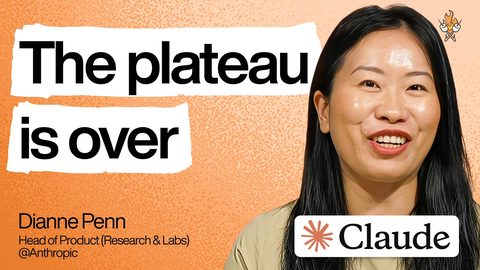
AI Going Vertical
Dianne Penn, President of Product at Anthropic, joined the company in 2023 as its first technical product manager when the product team was just five engineers. In the three years since, she has helped ship every Anthropic model from Claude 2 through Fable, and incubated transformative products like Claude Code, MCP, Skills, Claude Design, and core capabilities like computer use, tool use, and reasoning. Her conversation with Lenny Rachitsky traces Anthropic's improbable rise from an underdog lab to a company reportedly generating $50 billion in annual revenue — and what it means for how product management, research, and work itself are being reinvented.
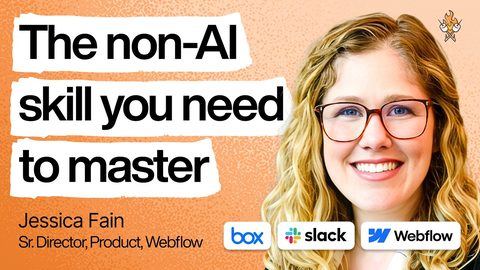
The Art of Executive Influence
Jessica Fain, product leader at Webflow and former chief of staff and PM at Slack, unpacks the art of influence — the single highest-leverage skill for product leaders outside of AI. Drawing from her experience working alongside Slack CPOs April Underwood and Tamar Yehoshua, she reveals how executives actually make decisions and why most PMs fail to get buy-in. Her core message: influence isn't politics — it's increasing the odds that your good ideas survive by treating your executive like your most important user.
Browse by idea
All 118 ideas →Every note is cut into ideas. These are the ones that keep turning up across separate sources; the number is how many notes carry them.
Added since August
Everything new →Notes added this quarter, newest first. Dates are the talk's publication, not the day it was reviewed.
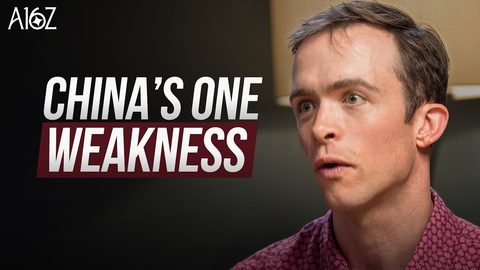
Open Models at the Frontier
Nathan Lambert — who co-led post-training at AI2 on Olmo and is now founding the nonprofit open-model research lab Trillium — breaks the open-vs-closed gap down into three forms of capital: compute, data, and talent. The conversation covers why the distillation story is a caricature, why the RL-environment data economy is where frontier progress is actually being bought, and how open models survive as fast followers with real ownership. The core bet: closed labs will always serve the cheapest intelligence at the frontier, but open models win elsewhere — on margins, private data, and the low-hanging compounding gains left in the open.
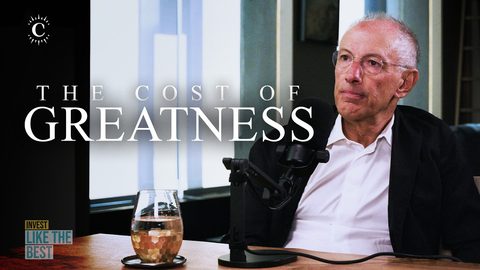
Michael Moritz — Steve Jobs, Elon Musk, and the Price of Greatness
Michael Moritz, former chairman of Sequoia Capital, traces how his family's escape from Nazi Germany imprinted a survivalist worldview that shaped his entire career — from Time magazine to Sequoia to backing Steve Jobs and Elon Musk. The conversation reveals how childhood trauma creates both drive and self-doubt, why monomomania is the price of greatness, and why the venture business he knew has fundamentally changed.
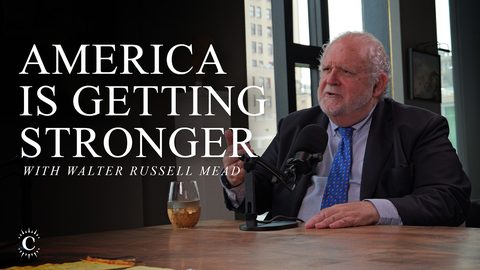
Why the World Order Is Collapsing and American Power Is Rising
Walter Russell Mead, professor at Bard College and author of Special Providence and God and Gold, traces the 300-year arc of Anglo-American global dominance and argues that while the post-WWII institutional order is collapsing, American power itself is not — the information revolution is supercharging the same advantages that have made maritime liberal societies dominant since the Dutch Golden Age. The conversation covers Trump's reinvention of political power, why the hobbits keep winning, the four schools of American foreign policy, the drone revolution in warfare, and why Mead is fundamentally optimistic about America's position despite the chaos.
What CXO Notes is
CXO Notes is a library of the talks, podcasts and essays that senior operators keep sending each other, each one read to the end and written up as a note: a verdict, the ideas it carries, and the timestamped lines that make the case.
It is not a summary service. A summary tells you what a talk is about; a note tells you whether to spend the hour, and what you would say about it in a meeting on Monday.