19 notes · 146 timestamped quotes · 118 ideas
Every note, in the order I would hand them to you
Not sorted by date or by how well a talk performed. Sorted by how many separate ideas each note unpacks — a long interview that says one thing ranks below a short one that says six.
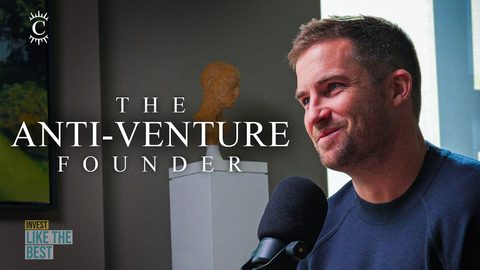
Self-Funded Contrarianism
William Hockey, co-founder of Plaid and founder of Column, argues that the best founders bet on themselves by taking extreme personal financial risk — including funding a bank acquisition with personal debt and surviving multiple margin calls. He makes a compelling case that Silicon Valley's VC model has made founding too safe, while early-stage employees actually bear more risk than the founders they join. The conversation ranges from why consensus-driven San Francisco is a creativity trap to why the real edge in company building comes from obsession with deeply boring niches.
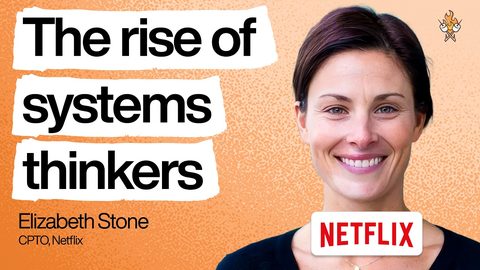
Systems Thinkers Over Specialists
Elizabeth Stone, CPTO of Netflix, argues that the AI era demands systems thinkers who abstract across domains over narrow specialists — while insisting that craft excellence remains scarce and essential. She explores how AI blurs functional roles without making them obsolete, why Netflix's “excellence as an operating system” (high talent density, autonomy, comfort with discomfort) maps directly onto how top AI labs operate, and how AI is reshaping entertainment from production through personalization.
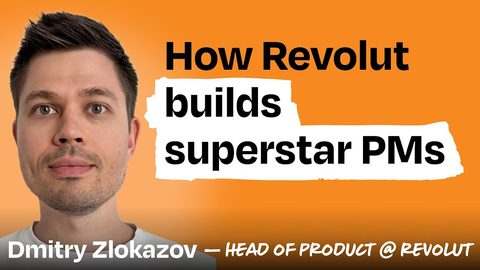
Product Owners as Mini-CEOs
Dmitry Zlokazov, Global Head of Product at Revolut, reveals how the $60B fintech super-app produces some of the world's best product managers — ranking alongside Palantir and Intercom. The conversation covers Revolut's “product owner” model (mini-CEOs with full ownership), hiring raw intellect over experience, obsession with “wow” products, and a counterintuitive leadership approach of going deep on 7–10 projects while letting 100+ others run autonomously.
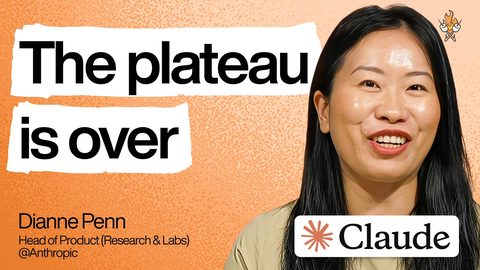
AI Going Vertical
Dianne Penn, President of Product at Anthropic, joined the company in 2023 as its first technical product manager when the product team was just five engineers. In the three years since, she has helped ship every Anthropic model from Claude 2 through Fable, and incubated transformative products like Claude Code, MCP, Skills, Claude Design, and core capabilities like computer use, tool use, and reasoning. Her conversation with Lenny Rachitsky traces Anthropic's improbable rise from an underdog lab to a company reportedly generating $50 billion in annual revenue — and what it means for how product management, research, and work itself are being reinvented.
The Art of Executive Influence
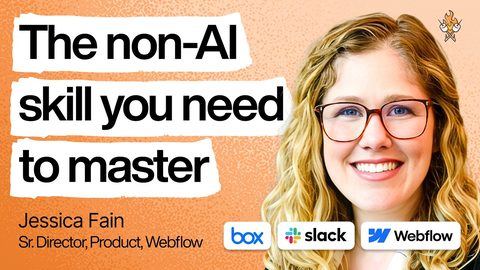
Jessica Fain, product leader at Webflow and former chief of staff and PM at Slack, unpacks the art of influence — the single highest-leverage skill for product leaders outside of AI. Drawing from her experience working alongside Slack CPOs April Underwood and Tamar Yehoshua, she reveals how executives actually make decisions and why most PMs fail to get buy-in. Her core message: influence isn't politics — it's increasing the odds that your good ideas survive by treating your executive like your most important user.
The Viral Growth Playbook
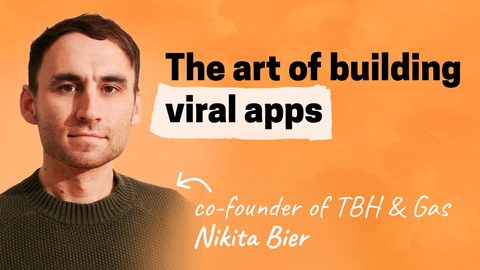
Nikita Bier — the founder who sold TBH to Facebook and Gas to Discord — reveals his playbook for making consumer apps go viral, built through years of trial-and-error across 15+ failed products. The conversation covers why teens are the only audience that matters for social apps, how to spot latent demand hiding in plain sight, and why product managers in big tech are detached from the pixels that actually make products work.
Investing Through Technology Cycles
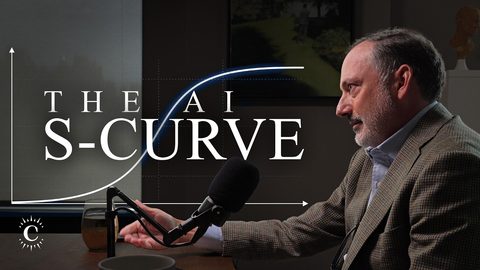
Alex Sacerdote, founder of Whale Rock Capital Management (~$17B AUM), breaks down his S-curve investment framework for technology cycles — why the AI infrastructure buildout resembles an unprecedented “L-curve,” how his firm identified Anthropic as a high-conviction bet during the foundational model shakeout, and how the decommoditization of hardware is creating structural winners across the supply chain. The conversation also covers the risks facing enterprise software incumbents and how the Whale Rock “learning machine” compounds knowledge across decades.
The Tactical Playbook for Getting 20-40% More Comp Without Sounding Greedy
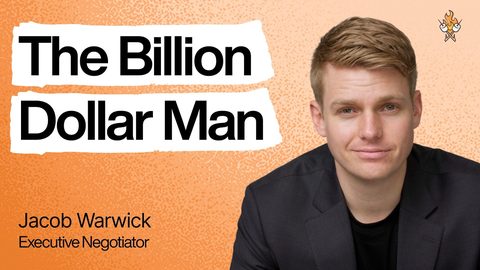
Jacob Warwick negotiates comp for senior tech executives, athletes, and Hollywood celebrities, and in this episode he lays out the psychology underneath it: negotiation reduces to information, timing, and the ability to say no. A simple “what's the chance there could be a little more?” is worth about 20% almost every time, and a full process is worth roughly 40%. The rest is positioning, channel control, and selling the other side a future in which you are already solving their problem.
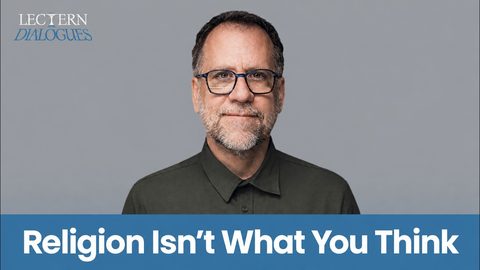
Cognition, Religion, and the Trust Apocalypse
John Vervaeke argues that you cannot study human cognition without studying religion — they co-emerged in the upper paleolithic and remain deeply entangled. He dismantles the first-generation cognitive science of religion (which treated religions as irrational belief systems) by drawing on religious studies ethnography and genealogy, showing that religions are primarily ecologies of practice, not propositions, and that the process of becoming religious is structurally identical to the process of becoming rational. The talk culminates in the claim that concepts/trust-apocalypse is driving a paradoxical return to the most traditional religious institutions.

Building AI Agents at Home
Jesse Genet, YC founder and homeschool mom of four kids under five, describes how AI agents — powered by Open Claude and Obsidian — have transformed her from someone resigned to stepping away from technical work into a prolific builder who codes by voice note from the park. She runs 11 agents that handle lesson planning, grocery ordering, email, and even spawning new agents autonomously, all while she prioritizes presence with her children. Jesse's vision is expansive: AI removing the drudgery of modern parenthood could make having children more attractive, potentially reversing the fertility decline.
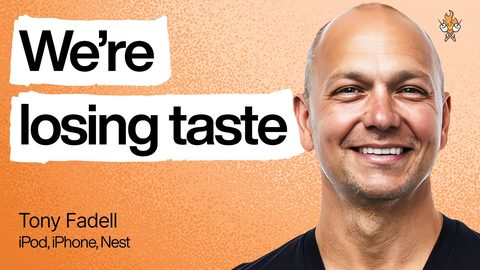
Building Products
The virtual keyboard was the most heated argument of the iPhone project, and the data never settled it. Fadell on 1.0 products, on micromanaging the decision rather than the work, and on why the why comes before the what.
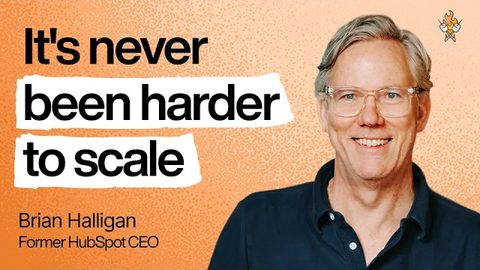
CEO Craft, Spiky Teams, and EV>TV>Me
Brian Halligan, who led HubSpot for nearly 20 years and now coaches fast-growth CEOs at Sequoia, unpacks what it takes to be a successful CEO in the AI era. He argues that starting a company has never been easier, but scaling one into a durable organization has never been harder — AI accelerates everything, competition is exploding, and CEOs must be faster, better decision-makers than ever before. The conversation covers his “LOCK+S” algorithm for evaluating founders, why hiring is the CEO's real job at the “adults table” (and why everyone is bad at it), the EV > TV > Me framework for preventing silos at scale, how to shift from employee-centric to customer-centric culture, and the near-fatal snowmobile accident that clarified his decision to step down. Throughout, Halligan shows why he's earned the label of “student of the job of a CEO” — the episode is dense with actionable frameworks for anyone building or scaling a company.
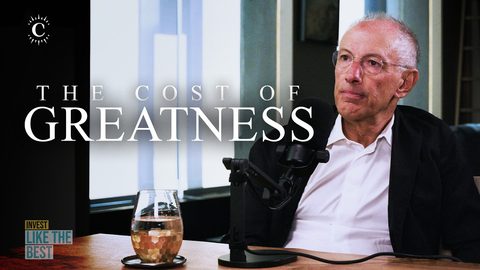
Michael Moritz — Steve Jobs, Elon Musk, and the Price of Greatness
Michael Moritz, former chairman of Sequoia Capital, traces how his family's escape from Nazi Germany imprinted a survivalist worldview that shaped his entire career — from Time magazine to Sequoia to backing Steve Jobs and Elon Musk. The conversation reveals how childhood trauma creates both drive and self-doubt, why monomomania is the price of greatness, and why the venture business he knew has fundamentally changed.
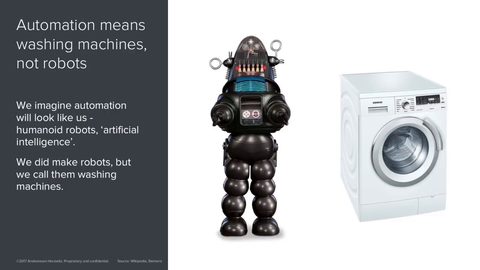
Technology S-Curves and the Waves That Follow
Benedict Evans maps the arc of technology through S-curves — PC, smartphones, mobile — and identifies four emerging waves poised to reshape everything: autonomy, mixed reality, crypto, and AI. He argues these are not separate stories but cascading platforms, each at a different construction stage, with AI already in its rocket-fuel phase and machine learning becoming a universal enabling layer like relational databases.
Why the World Order Is Collapsing and American Power Is Rising
Walter Russell Mead, professor at Bard College and author of Special Providence and God and Gold, traces the 300-year arc of Anglo-American global dominance and argues that while the post-WWII institutional order is collapsing, American power itself is not — the information revolution is supercharging the same advantages that have made maritime liberal societies dominant since the Dutch Golden Age. The conversation covers Trump's reinvention of political power, why the hobbits keep winning, the four schools of American foreign policy, the drone revolution in warfare, and why Mead is fundamentally optimistic about America's position despite the chaos.
Open Models at the Frontier
Nathan Lambert — who co-led post-training at AI2 on Olmo and is now founding the nonprofit open-model research lab Trillium — breaks the open-vs-closed gap down into three forms of capital: compute, data, and talent. The conversation covers why the distillation story is a caricature, why the RL-environment data economy is where frontier progress is actually being bought, and how open models survive as fast followers with real ownership. The core bet: closed labs will always serve the cheapest intelligence at the frontier, but open models win elsewhere — on margins, private data, and the low-hanging compounding gains left in the open.
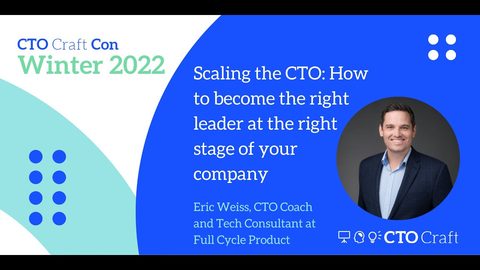
CTO Full Stack Leadership
Eric Weiss, executive coach to SaaS founders and CTOs, maps the CTO journey across four company growth stages—Startup Hacker, Growth, Scale, and Enterprise—each demanding a fundamentally different leadership persona. He introduces the Full Stack Leadership Framework and Personal Maturity Map as practical tools for CTOs to diagnose their gaps, delegate what no longer serves the company, and evolve from hands-on builder to inspiring leader. The core insight: the CTO is often their own biggest bottleneck, and the only way to scale is to systematically let go.
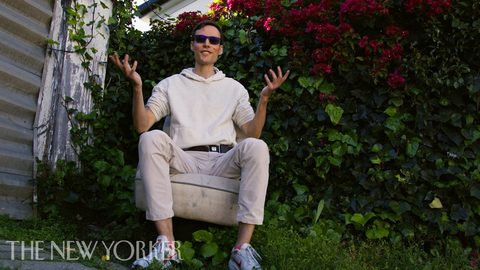
An OpenAI Engineer and His Friends Debate the Future
A group of high school friends — including SNL/Pixar comedy writer Simon Rich and OpenAI engineer Dan — reunite at a wedding and grapple with what AI really means. Dan demos GPT-era poetry that stuns them, leading to a book project where AI writes in its own voice. The conversation escalates into a raw, honest debate about friendship, the singularity, meaning, and whether the world will ever take AI seriously before it's too late.
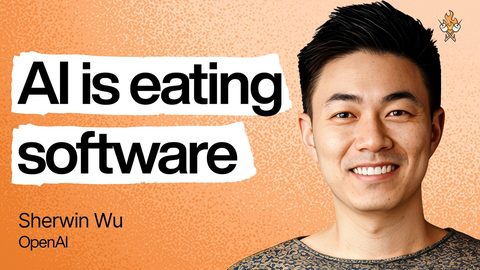
The Future of Software
Sherwin Wu, head of engineering for OpenAI's API and developer platform, reveals that 95% of OpenAI engineers now use Codex daily and 100% of PRs are reviewed by AI. He frames the engineering role shift through the lens of SICP's “sorcery” metaphor — engineers are becoming sorcerers managing fleets of 10-20 parallel agents. The conversation spans the second-order effects of AI leverage (a coming startup boom), why most enterprise AI deployments have negative ROI, and why the models will “eat your scaffolding for breakfast.”